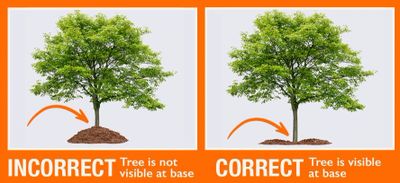
Mulching around trees improves tree health
What are the benifits of mulch?
Mulching might seem like a finishing touch in landscape design, but it plays a vital role in keeping your trees healthy, strong, and beautiful. Whether you’re planting new trees or caring for mature ones, the right mulch can provide long-term benefits that go well beyond aesthetics. If you have ever tried to keep a tree healthy through a North Texas summer, you understand the challenge. Weeks of triple-digit heat, minimal rainfall, and dense clay soil create a hostile environment for roots. A proper mulch ring addresses those stressors. In this guide, we’ll break down everything you need to know about, the benefits of mulch, and how to properly apply it for maximum tree health.
Key benefits of mulch for trees
1. Moisture Retention: Mulch acts as a protective layer that reduces water evaporation from the soil, helping trees conserve moisture during dry periods and reducing the need for frequent watering, which supports stable root development and tree growth.
2. Temperature Regulation: Mulch insulates tree roots, buffering them from extreme temperatures. In summer, it keeps the soil cool, while in winter, it protects roots from freezing, creating a consistent environment that encourages healthy root growth,
3. Soil Enrichment: Organic mulches, such as wood chips, bark, compost, or leaf litter, gradually decompose, adding nutrients and organic matter to the soil. This improves soil structure, aeration, drainage, and microbial activity, which enhances nutrient uptake and supports strong root systems.
4. Weed Suppression: A layer of mulch blocks sunlight from reaching the soil, reducing weed germination and growth. This minimizes competition for water and nutrients, allowing trees to focus energy on growth and development.
5. Protection and Aesthetics: Mulch can prevent soil erosion, reduce damage from lawnmowers or trimmers, and improve the visual appeal of the landscape. Properly applied mulch also helps prevent soilborne diseases by creating a barrier against pathogens.
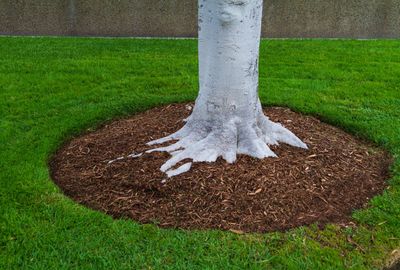
How to properly apply mulch to trees.
Mulching around your trees can offer many benefits, but only when you do it correctly. Improper mulching can, unfortunately, lead to serious tree health issues and even premature death. Volcano mulching, wrong materials, and neglected mulch beds quietly stress trees for years before homeowners notice the damage.
Learning how to mulch around a tree properly takes just a few minutes, and the technique is straightforward. Follow these steps for the best results:
- Clear the area. Remove any old, compacted mulch, weeds, and debris from around the base of the tree. This gives you a clean starting point and prevents layering problems.
- Identify the trunk flare. The trunk flare is where the trunk widens as it meets the ground. This area must remain exposed and never buried under mulch or soil.
- Create a donut, not a volcano. Spread mulch in an even ring starting three to six inches away from the trunk. Leave that gap clear so the bark stays dry and visible.
- Maintain proper depth. Apply two to four inches of mulch across the ring. Use the lower end (two inches) for finer materials and the higher end (four inches) for coarser chips.
- Extend outward. Spread the mulch as far toward the drip line as practical. For large trees, a minimum of three to four feet from the trunk is a solid target.
- Choose organic material. Native hardwood mulch, cedar, pine bark, or composted leaves are all excellent choices for North Texas landscapes.
If you are unsure about your tree’s specific needs, our ISA Member Arborist are happy to evaluate your mulch beds, recommend adjustments, or need a professional mulch application and care plan, we are here to help. Call us at 469-819-4917
5 Common Mulching Mistakes That Could Kill Your Trees
Mistake 1: Volcano Mulching
This is the most widespread and most damaging mulching mistake we encounter. Volcano mulching means piling mulch into a tall cone directly against the trunk. It looks tidy at first glance, but it creates serious problems. The constant moisture trapped against the bark promotes fungal infections and decay. It also creates a hidden highway for insects (bark beetles, carpenter ants) to access the inner wood undetected. Over time, the tree may develop adventitious roots that girdle the trunk, slowly strangling it. If your mulch looks like a volcano, pull it back immediately.
Mistake 2: Mulching Too Deep
More is not better when it comes to mulch depth. Anything beyond three to four inches starts to suffocate the soil underneath. An overly thick layer prevents rainwater from reaching the roots and reduces the oxygen exchange that roots need to function. The result is a tree that looks healthy above ground while its root system deteriorates below the surface. Aim for two to four inches, and measure before you spread.
Mistake 3: Using the Wrong Mulch Material
Not all mulch is created equal. Dyed mulches (the bright red, black, or gold varieties) are often made from recycled wood pallets or construction debris. They can leach chemicals into the soil and offer little nutritional value as they decompose. Rubber mulch, made from shredded tires, is even worse. It does not break down, releases toxic compounds as it heats up, and can increase soil temperatures rather than regulate them. Stick with natural, organic mulch products whenever possible.
Mistake 4: Not Extending Mulch Far Enough
A small ring of mulch immediately around the trunk is better than nothing, but it misses most of the root zone. A tree’s roots extend well beyond the canopy, and the most active feeder roots are near the drip line. Ideally, your mulch ring should extend to the drip line. For mature trees where that is impractical, aim for at least three to four feet out from the trunk in every direction. The wider the mulch ring, the greater the benefits.
Mistake 5: Never Refreshing or Replacing Old Mulch
Mulch is not a “set it and forget it” solution. Over time, organic mulch compacts and develops a hydrophobic crust on top. That crust repels water instead of helping retain it, defeating the entire purpose. Old, matted mulch can also harbor fungal mats and reduce airflow to the soil. Plan to fluff or turn your existing mulch at least once a year and add a fresh layer every one to two years to maintain proper depth.