Proper Pruning
Beautiful Trees for Your Property
Proper tree pruning is an essential element of overall tree care and long-term health of your tree. The way a tree is climbed, pruned, and treated can have long-term effects on its health, structure and safety.
Improper tree pruning can permanently damage a tree. Over-pruning, topping, lions-tailing, removing large healthy limbs, or making poor cuts can create decay, weak regrowth (water sprouts) sunscald, stress and long term structural problems.
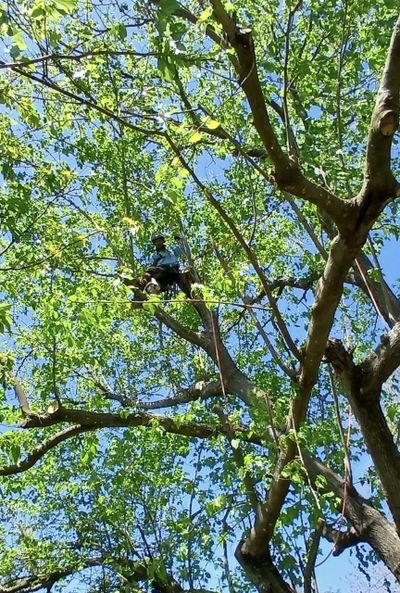
We never climb a tree we are pruning wearing tree climbing spikes (spurs, gaffs, etc). Tree climbing spikes should never be worn for tree pruning's. Climbing spikes leave lots of damages and leaves open wounds, inviting pests and decay into the tree.
We Adhere to ANSI Guidelines
The American National Standards Institute (ANSI) has set forth guidelines for tree pruning and trimming that we adhere to in order to help further ensure practices that are safe and in the best interest of your trees. These standards for tree pruning are comprised of 4 sections; crown cleaning, thinning, raising, and reducing (only performed when appropriate).
Dead and Damaged Wood Removal (previously known as crown cleaning)
Removal of dead, dying, diseased, and structurally unsound branches within the crown.
Raising the Tree
Raising your tree grants enough space for the vertical clearance necessary to walk underneath the tree, this is frequently required to be within city codes.
Selective Trimming of the Tree (previously known as thinning)
Selective trimming of the tree is the artful removal of living plant material from dense areas within your tree, this helps to reduce weight and allows for wind to pass through your tree more safely.